Hiring for fit in a changing legal sector

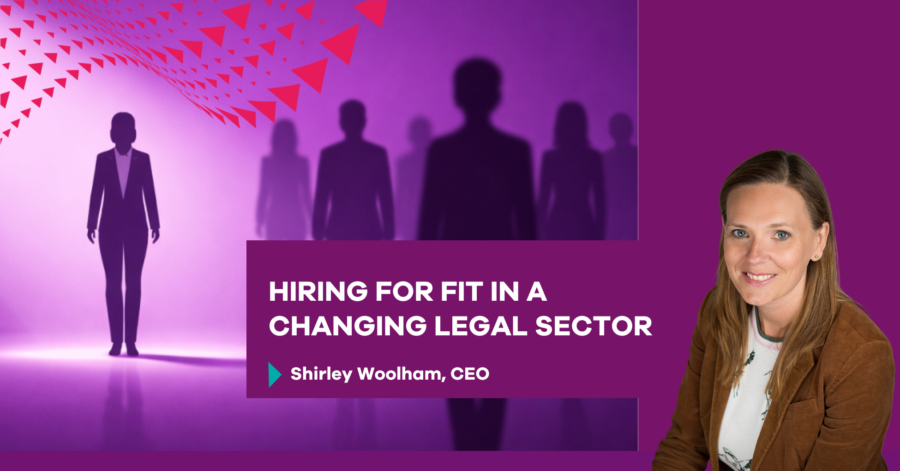
Exploring the essential personal traits for a thriving legal business of the future.
Over recent years, I have found myself thinking far less about what people do in our business and far more about how they do it. Technical expertise matters enormously, it always has, but this doesn’t fully explain why some businesses execute with purpose and cohesion while others, with similar expertise, can struggle to find the same rhythm.
In personal injury, as in many sectors, the range of technical disciplines we now rely on has grown significantly. Lawyers and paralegals continue to play a central role, but so too do technologists, data analysts, insight specialists, customer experience leaders, change experts and others who bring deep expertise in their respective fields.
This breadth of skill is now essential and will only become more important in the years ahead. Yet it has also reinforced a truth that feels increasingly clear to me: technical expertise, on its own, isn’t what makes people thrive or what allows organisations to perform at their very best.
There is widely published research on the value of ‘hiring for fit’ as a way of protecting both culture and execution. It has underpinned the hiring strategies of many enlightened businesses for decades. So, what’s changed?
In today’s environment, as leaders we are bringing together a much broader and diverse range of technical expertise, so the need to be clear about fit is more crucial than ever.
What I am really talking about is getting to the heart of what makes people truly thrive in an organisation – where they feel they genuinely belong and where that sense of alignment shows up in longer, higher-performing careers and contributions, with outcomes that genuinely matter, delivered consistently.
Over the past year, I have reflected on this more deliberately in the business I lead, observing the traits that seem to be present in colleagues who excel in a personal injury law firm. I wanted to understand this better so that we can continue to evolve our culture and environment in ways that propel us forward as a business. It remains an almost constant work-in-progress, but three traits stand out to me.
Curiosity
For me, curiosity is essential and has become the key currency of the modern workplace. The desire to continue to learn, adapt and evolve as society, technology, expectations and standards change is a powerful trait. It allows us to bring the outside into our business and look to adjacent and sometimes unrelated industries to explore and find new ways of working. It’s about a desire for ongoing personal development, as much as it’s about building formal and informal networks that connect ideas and practices in ways that allow everyone to thrive.
Accountability
So much time in business is lost to unnecessary escalation, issues that could be resolved locally being pushed upwards for reassurance or decision. Teams made up of people who are wired to stay with an issue until a way forward is agreed are invaluable. They use their influence, adapt and keep things moving. Of course, cultures must allow accountability to be taken, and governance should always provide clear guardrails, but it is powerful when people don’t wait for permission to exercise judgement and ownership. It’s a characteristic that creates a shared sense of responsibility for progress and a genuine belief that each person can make a difference.
Resilience
Things don’t always go according to plan, in life or in business and the personal injury sector is a clear example of that. Over the years, our sector has experienced its fair share of both expected and unexpected change – reshaping business models, processes and ways of working. In this environment, the ability to acknowledge difficulty, steady yourself and continue with purpose is vital. It keeps people and business moving forward, individually and as part of a team and it focuses attention on what can be done next, rather than becoming stuck in the challenge itself. Resilience doesn’t ask us to pretend things aren’t hard, that would be inauthentic. It simply reflects a conscious choice we make to keep going, with purpose, despite that reality.
Whilst individually virtuous, these three traits ideally need to exist in reasonable balance with each other to be truly effective. Curiosity without resilience can create fear of failure, meaning new ideas never get realised. Resilience without accountability can leave people with a steely core, but without the ability to execute. And accountability without curiosity can result in the same remedies being applied to new problems.
I believe these traits are a more essential foundation in hiring decisions than technical expertise alone
As our sector seeks to attract and retain a broader range of specialist skills over the coming years, I believe we will benefit from honing our shared set of traits that sit beyond technical expertise. This ensures we give ourselves the best chance of using our culture and ways of working as a genuine force for change and competitive advantage in a market that will, as it evolves, continue to demand the very best of us.
Interested to join Minster? Check out our vacancies page here