Changing Mindsets: Turning Disputes into Resolutions

It’s easy to think of the relationship between claimants and defendants in a personal injury claim as two sides fighting a conflict, with each jostling to gain the upper hand. Both sides have their own interests to protect and, traditionally, giving ground could be seen as losing. It’s a completely understandable mindset, but is it always the most effective way to achieve the best client outcomes?
Arguably not, particularly if we lose sight of the outcome we’re actually trying to achieve. The aim shouldn’t be to create unnecessary effort at the negotiating table simply to gain or save a few extra pounds. Ultimately, our focus should be on achieving the best outcomes for our customers and resolving claims as quickly and fairly as possible for everyone involved.
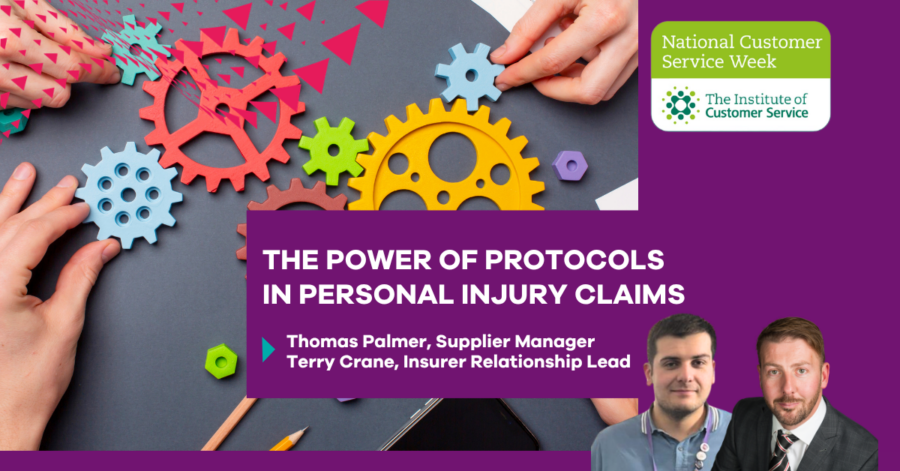
As Insurer Relationship Lead and Supplier Manager, our roles give us different perspectives on the claims journey, but we share the same focus: doing right by our customers. Two principles sit at the heart of that approach. Firstly, every claim belongs to a real person, and we handle it with that in mind. Secondly, our objective is to secure the best possible outcome for the customer, including removing avoidable delays that happen in the court process. It is not simply to “beat” the insurer or solicitor on the other side.
The first principle may sound obvious, but it’s an important one. Our customers aren’t commodities or reference numbers. They’re people who have suffered injury, financial loss and inconvenience. Even after working on thousands of cases during our careers, we never want to become complacent about who we are doing this for and why.
The second principle is one that has evolved throughout our careers. We like to win, who doesn’t? But we often subconsciously assume that for one side to win, the other must lose. Historically, we might have thought that getting the best result meant the third party had to come off worse. Experience has taught us that this isn’t necessarily the case. Achieving a good outcome for the customer doesn’t have to mean creating a bad one for somebody else.
That change in mindset is particularly important in a sector where technology and portals have reduced some of the human contact between claimant and defendant representatives. While those systems have brought efficiencies, direct dialogue remains an important part of effective collaboration, helping both sides understand and resolve issues before mediation or litigation becomes necessary.
Most of us who have worked in the industry for any length of time have built up a strong network of contacts, and there is real value in making use of those relationships. In recent years, we’ve introduced settlement meetings with contacts at a number of insurers. Open dialogue can reduce misunderstandings and help avoid significant delays, which can be particularly difficult to understand when you’re the customer waiting for your claim to conclude.
This approach extends across our relationships with 20 of the largest insurers, with more than 700 cases a month benefiting from direct dialogue, which we have built and expanded since August 2024. Where that dialogue leads to settlement, it can save valuable time for the customer while also reducing unnecessary time and cost for both sides.
One insurer described the relationship as follows:
“We have been working with Minster Law for almost 2 years now with a view to narrowing the issues between the Claimant and Defendant. We have established a good working relationship which has helped to reduce lifecycles and costs associated with claims, and we look forward to that relationship continuing.”
For us, that captures what changing the mindset can achieve. Collaboration doesn’t mean compromising the interests of the customer or conceding for the sake of it. It means recognising the areas where both parties can work together to remove unnecessary friction, narrow the issues in dispute and focus their efforts on reaching the right outcome.
At the centre of all of this is the customer. Acting in each client’s best interests is fundamental to what we do and is reflected in the SRA Principles. Their expectation is straightforward: that we should find ways to settle their claim as quickly and fairly as possible while delivering an excellent level of service. The fact that some claims may now be lower in value following whiplash reforms shouldn’t mean that those customers receive a lower standard of service.
Ultimately, it’s the customer experience that shows why this approach matters:
“From the moment my insurance company knew of my accident, they put me straight through to Minster Law. They really put my mind at rest from the go. They kept me updated and are very professional. If you need to make a claim, my advice would be go with Minster Law. Thank you for everything you’ve done for me.”
Five-star customer review, following settlement through one of our insurer settlement meetings
For the customer, the incident has already happened. Neither we nor the insurer can turn back the clock. What we can influence is what happens next. Both sides can work towards bringing the matter to a conclusion, meeting the customer’s needs while satisfying the legal requirements of the claim.
That is the mentality we take into meetings with insurers. We’re not there to beat the people sitting opposite us. We’re there to get the best outcome we can for the customer.
When both sides approach a claim with that mindset, focusing on fairness, efficiency and resolution rather than simply on who “wins”, customers can move forward sooner, everybody stands to benefit.